Solo Female Travel · South America
Bolivia, on foot & salt.
Nine days from the shores of Lake Titicaca through the cable cars of La Paz to the mirror-white Salar de Uyuni — still blissfully undiscovered, and rated 7/10 for solo female safety.
Bolivia is a simple, spectacular, and utterly unforgettable country that still feels blissfully undiscovered. It offers wild landscapes that redefine what nature can be — from Lake Titicaca and the high-altitude cable cars of La Paz to the surreal Uyuni Salt Flats. Local transport via collectivos and overnight buses is simple, and the locals are exceptionally kind, warm, and welcoming.
Before you go
Bolivia solo travel, at a glance
Overall Safety (Solo Female)
7/10 — feels safe and welcoming; locals are very kind, though speaking basic Spanish is key.
Local Transportation
Collectivos, local vans & overnight buses — cheap and easy. Cable cars (Teleférico) give fast transit across La Paz.
Hiking Intensity
10/10 — high altitude (3,800–4,300m+) makes hikes intense. Take time to acclimatize.
Food & Dining
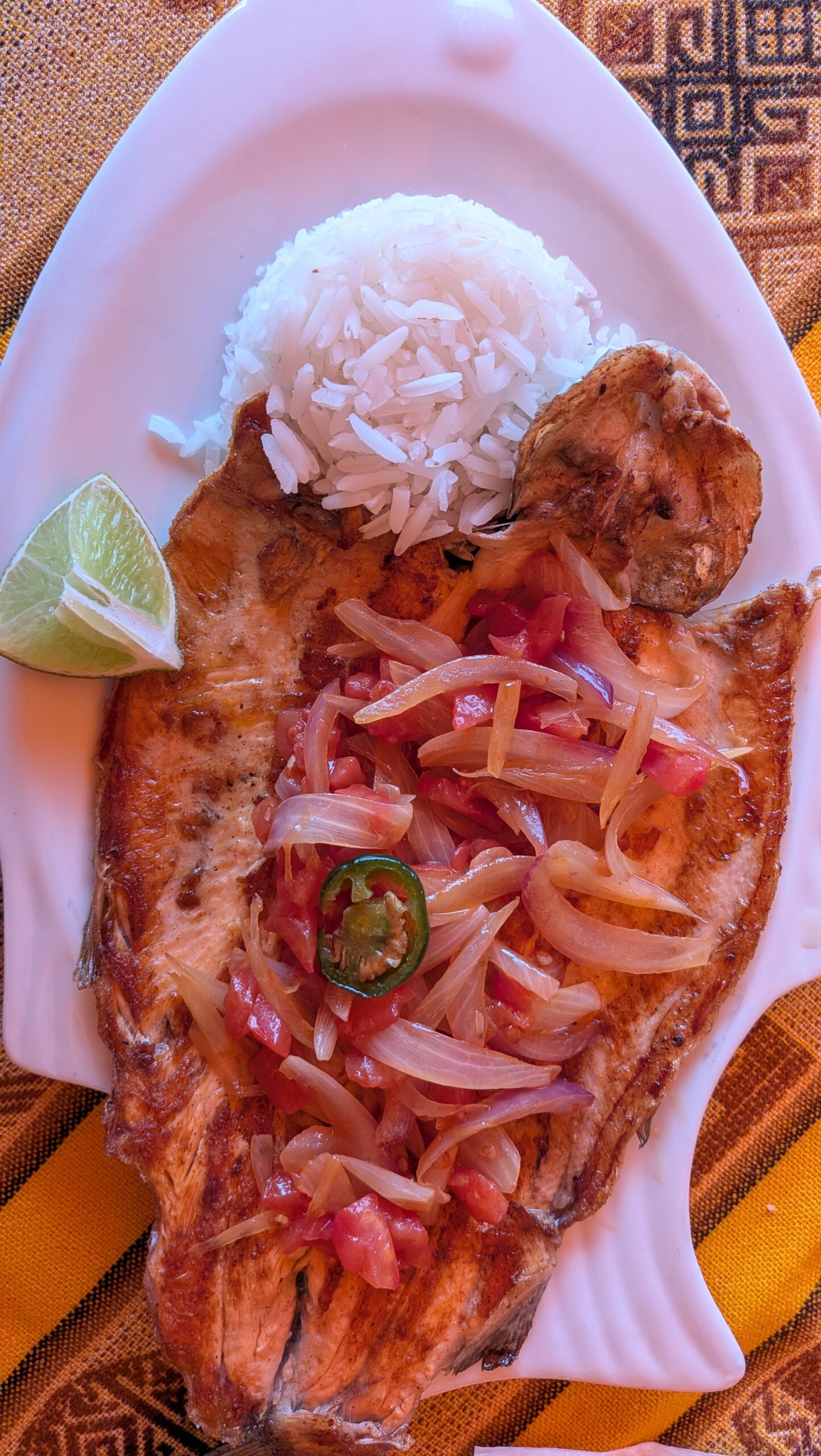
Simple, cheap and hearty — grilled fresh trout, chicken soup, rice, beans, and fresh juices like tumbo.
Cash vs. Card
USD & Bolivianos (BOB) — cash is essential for transport, entry fees and markets. No haggling needed; prices are already low.
Language Spoken
Spanish — hostel staff and major tour guides speak English, but collectivo drivers, market vendors, and bus terminal staff mostly speak Spanish.
Best time to visit
The best time to visit Bolivia is during the dry season from May to October, when clear skies and stable weather make travel easiest across the Andes, Lake Titicaca, and the dry salt flats. However, if you want to see the famous mirror effect on the Salar de Uyuni, the rainy summer months from January to March are ideal.
Budgeting
Estimated daily costs
$60–75
Per day, USD · food + local transport + mid-range stay
Solo Female Travel
Is Bolivia safe for solo female travelers?
Yes — Bolivia feels safe, authentic, and welcoming for solo female travelers, rated 7/10. Because it hasn’t been over-commercialized by social media trends, the atmosphere remains grounded. People go out of their way to make sure you’re cared for.
Knowing conversational Spanish is highly recommended to communicate smoothly with local drivers and shopkeepers.
The Route
9-day Bolivia itinerary breakdown
Border Crossing, Copacabana & Sunset Hike
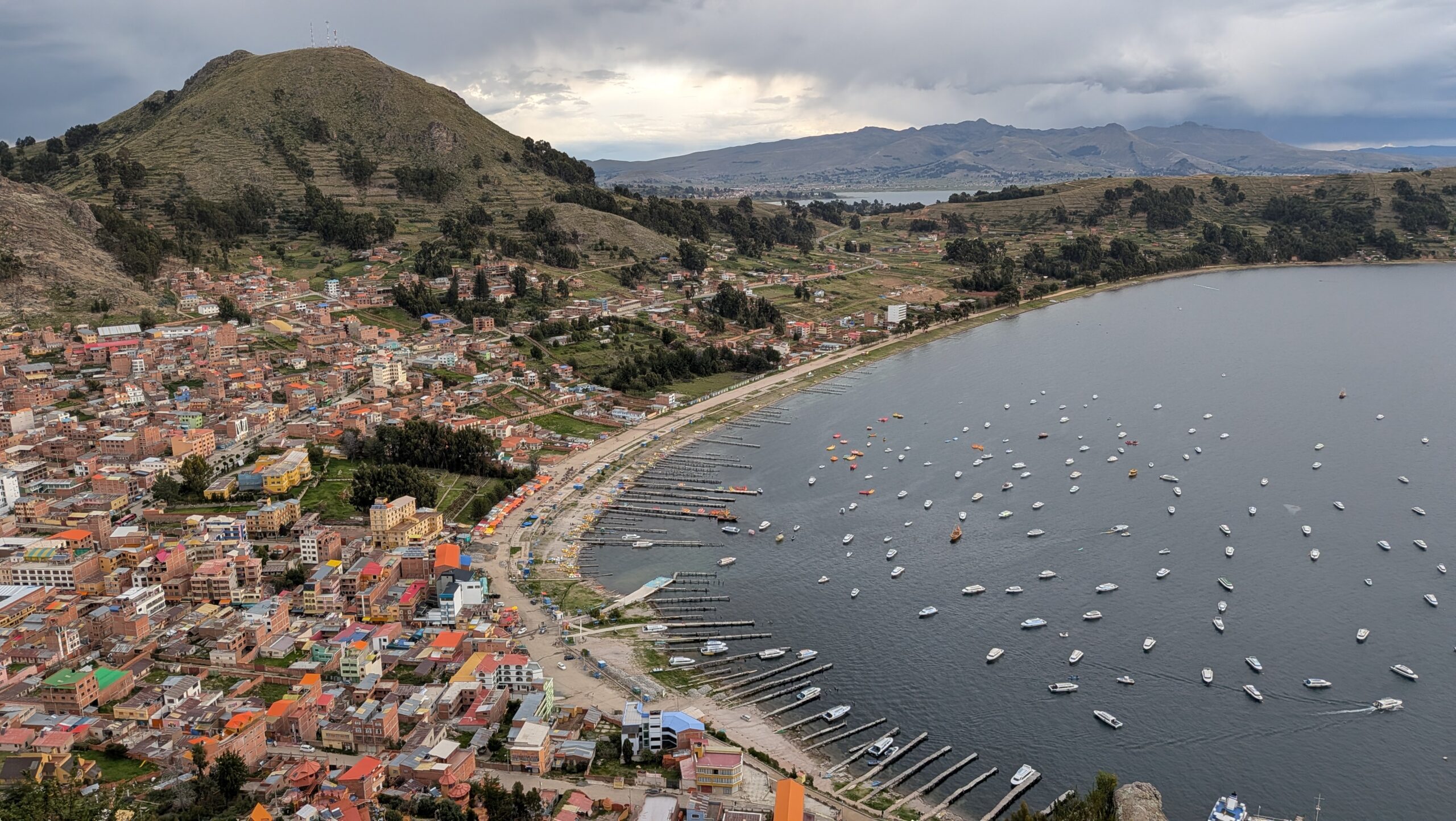
Photo: overlooking the bay of Copacabana from the mountain hike. Cross into Bolivia and settle into quiet Copacabana on Lake Titicaca. Grab fresh grilled trout at fish kiosk #20 near the pier, then climb the local peak for a sunset panorama over the bay.
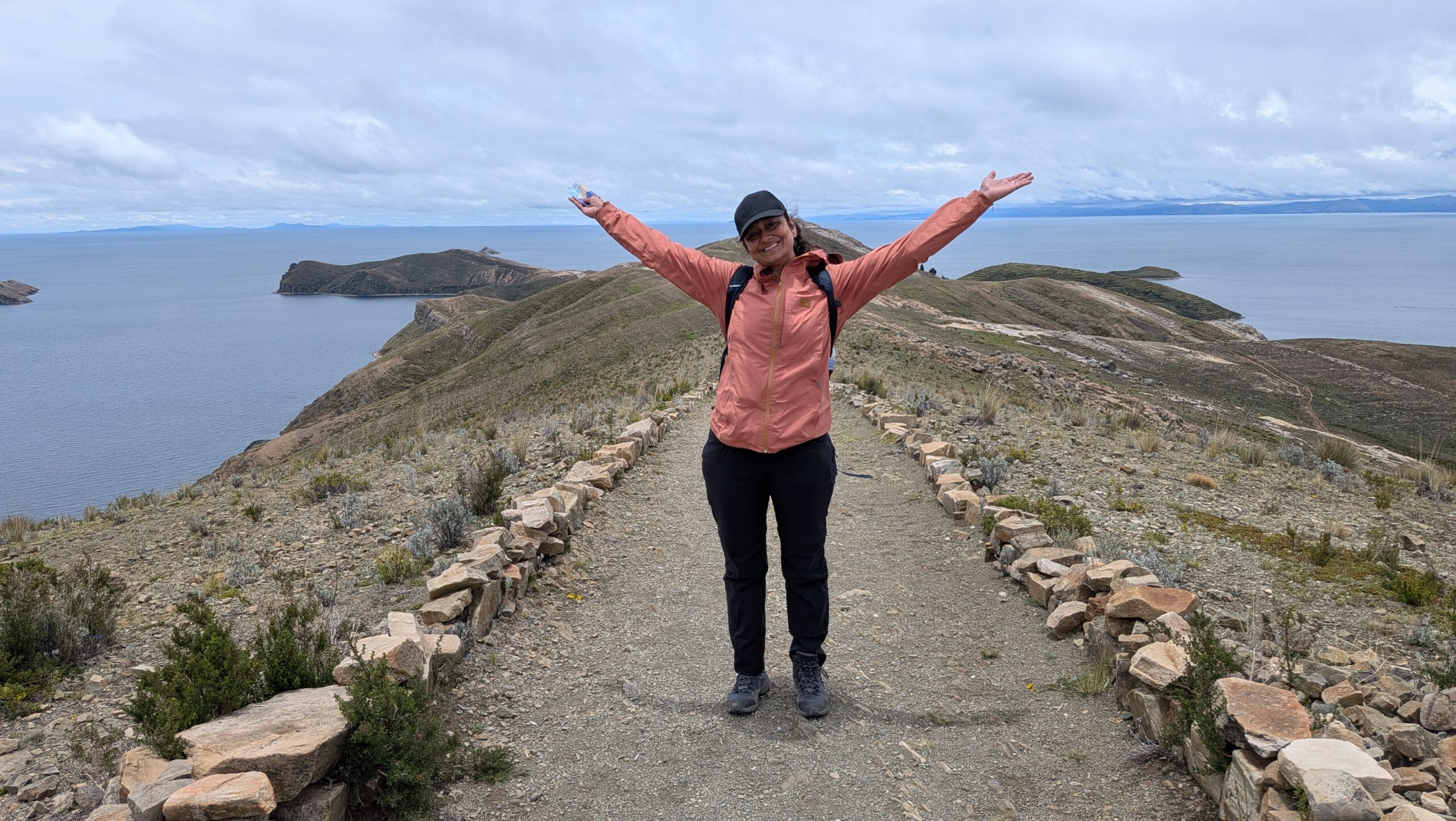
Day Trip to Isla del Sol
Photo: the high trail on Isla del Sol. A 9:30am boat to the island’s north shore, then a ridge hike south past ancient ruins and coastlines that could pass for Nova Scotia. Boat back to Copacabana by 4pm for Diablo spicy fish and tumbo juice.
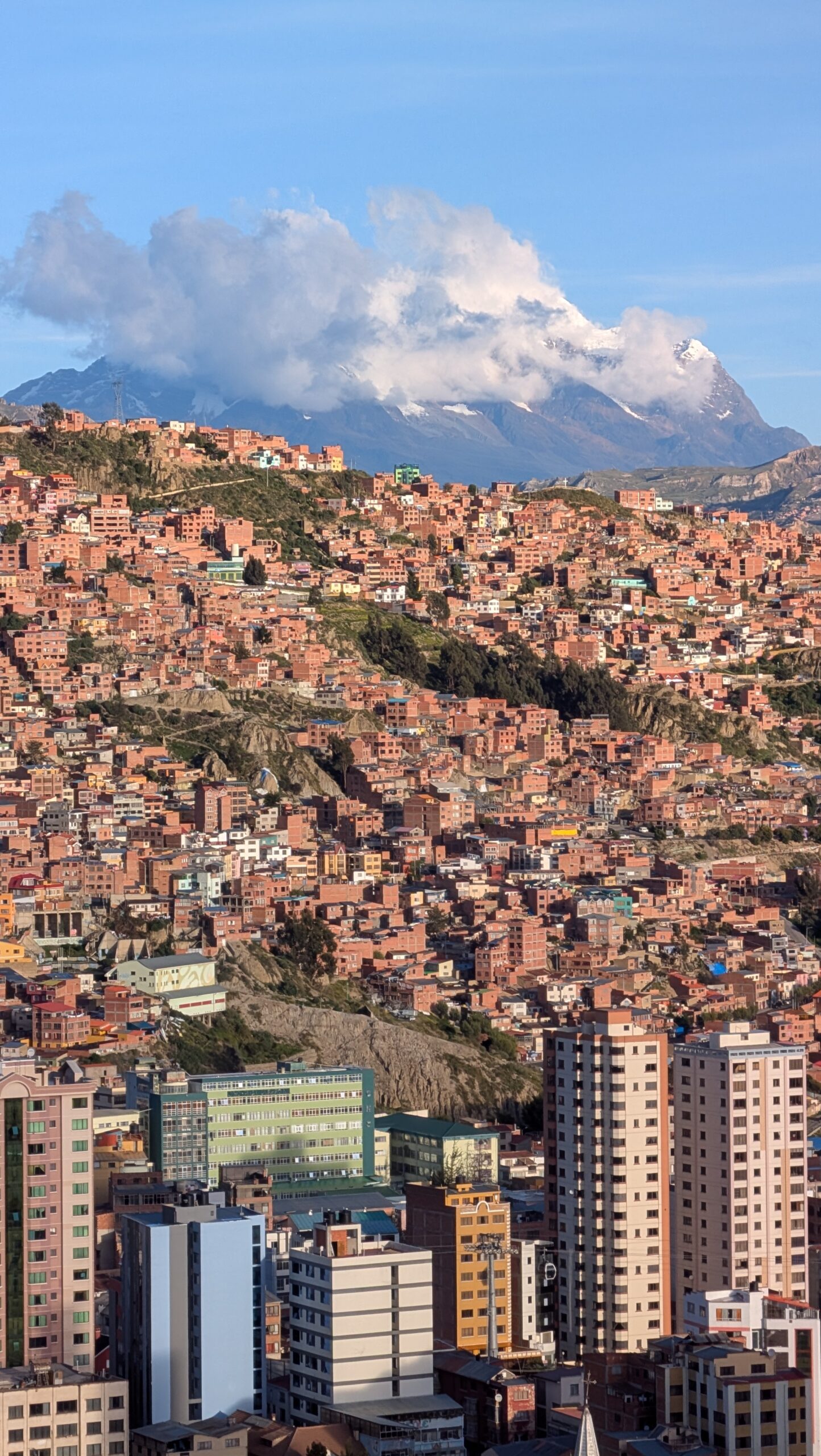
Scenic Drive to La Paz, Witches’ Market & Sunset Viewpoint
Photo: the La Paz basin from Mirador Killi Killi. A 3-hour collectivo to La Paz (45 BOB), river barge crossing included. Browse alpaca knits at the Witches’ Market, then ride up to Mirador Killi Killi for 360° views at sunset.
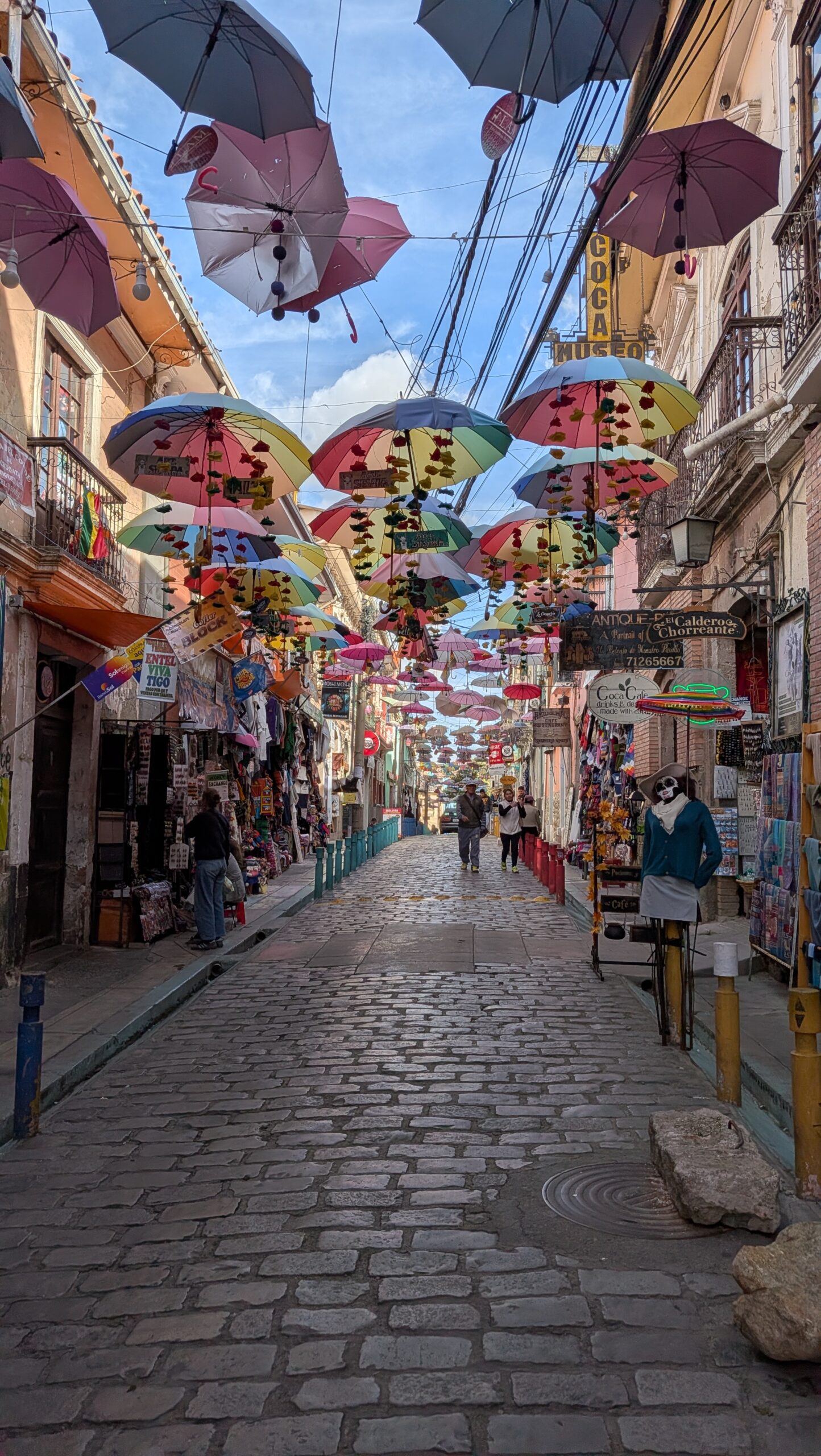
Fine Dining & City Rest Day
Photo: central La Paz street views. A gourmet lunch at Popular Cocina Boliviana, a modern take on traditional Bolivian flavors. Spend the rest of the day walking central La Paz, running errands, and resting up.
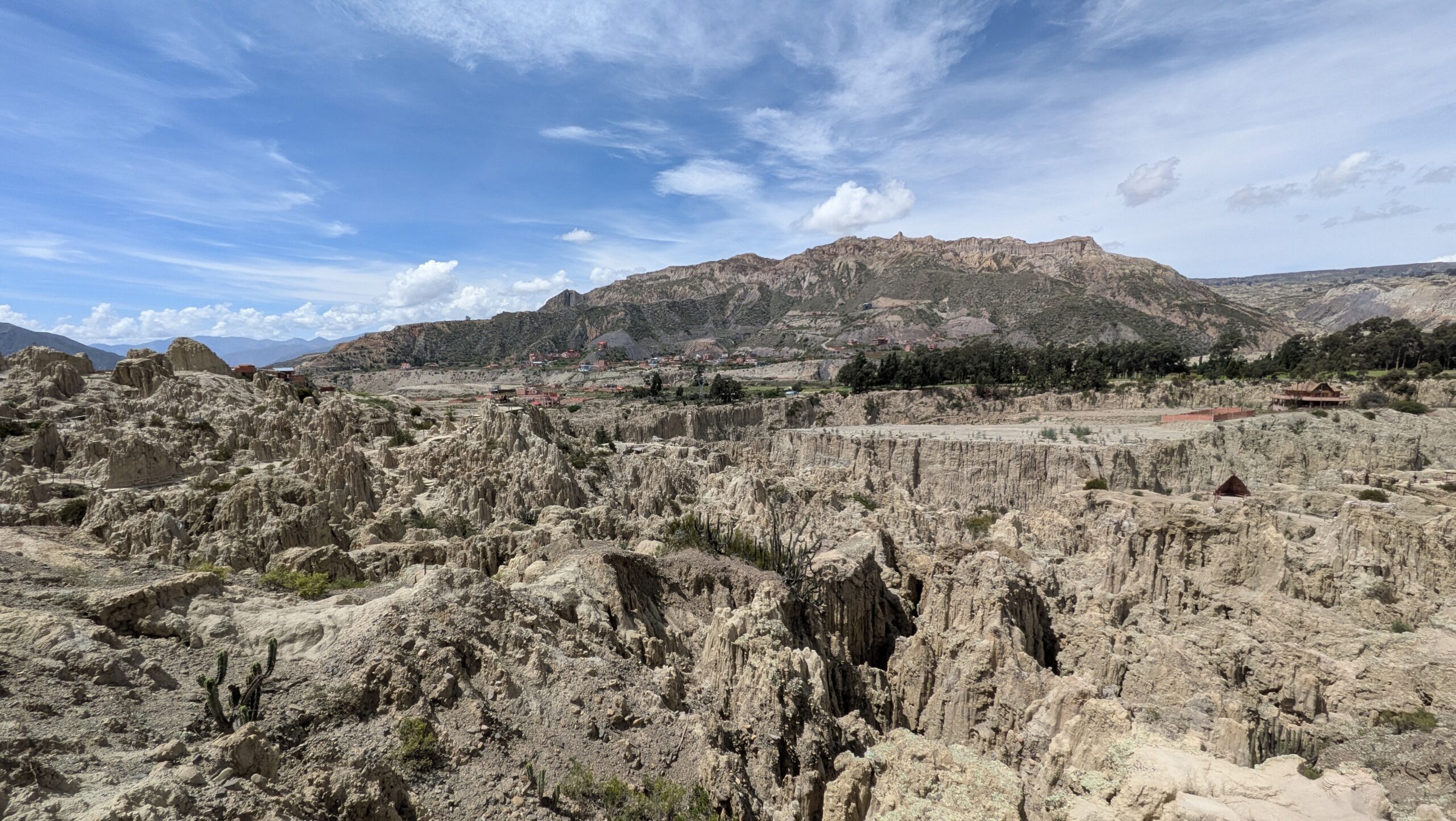
Valle de la Luna, Teleférico Rides & Overnight Bus to Uyuni
Photo: the spires of Valle de la Luna. A quick trip to the clay formations of Moon Valley, then three Mi Teleférico cable car lines soaring above the city. Board an overnight sleeper bus to Uyuni.
Arrival in Uyuni Town & Desert Reset
Photo: a street view of Uyuni town. Check into a central hostel, take a hot shower, and reset. An inexpensive lunch at a local salt restaurant and a few errands before the multi-day desert tour begins.
Salar de Uyuni — Train Cemetery, Salt Flats & Sunset
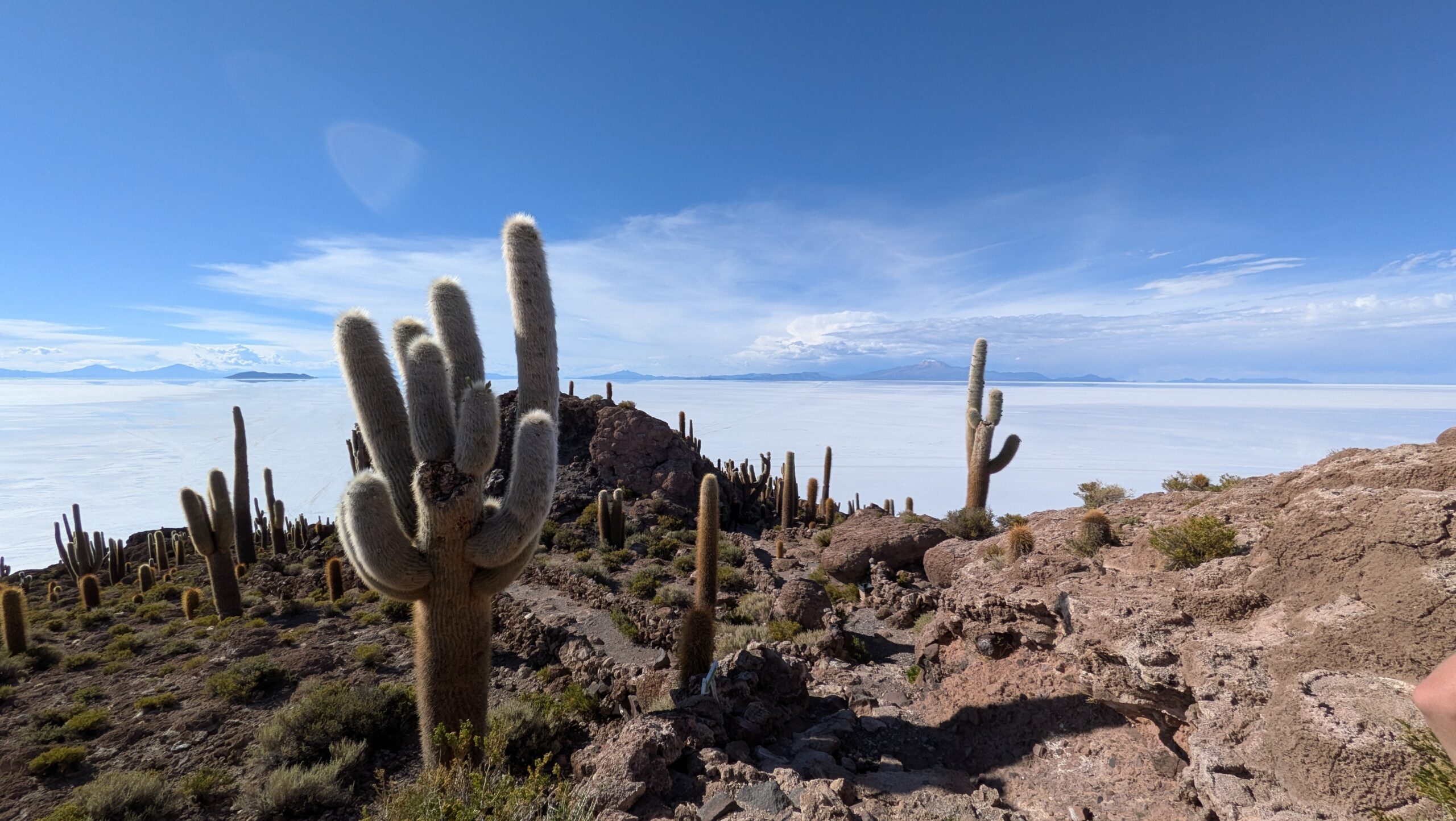
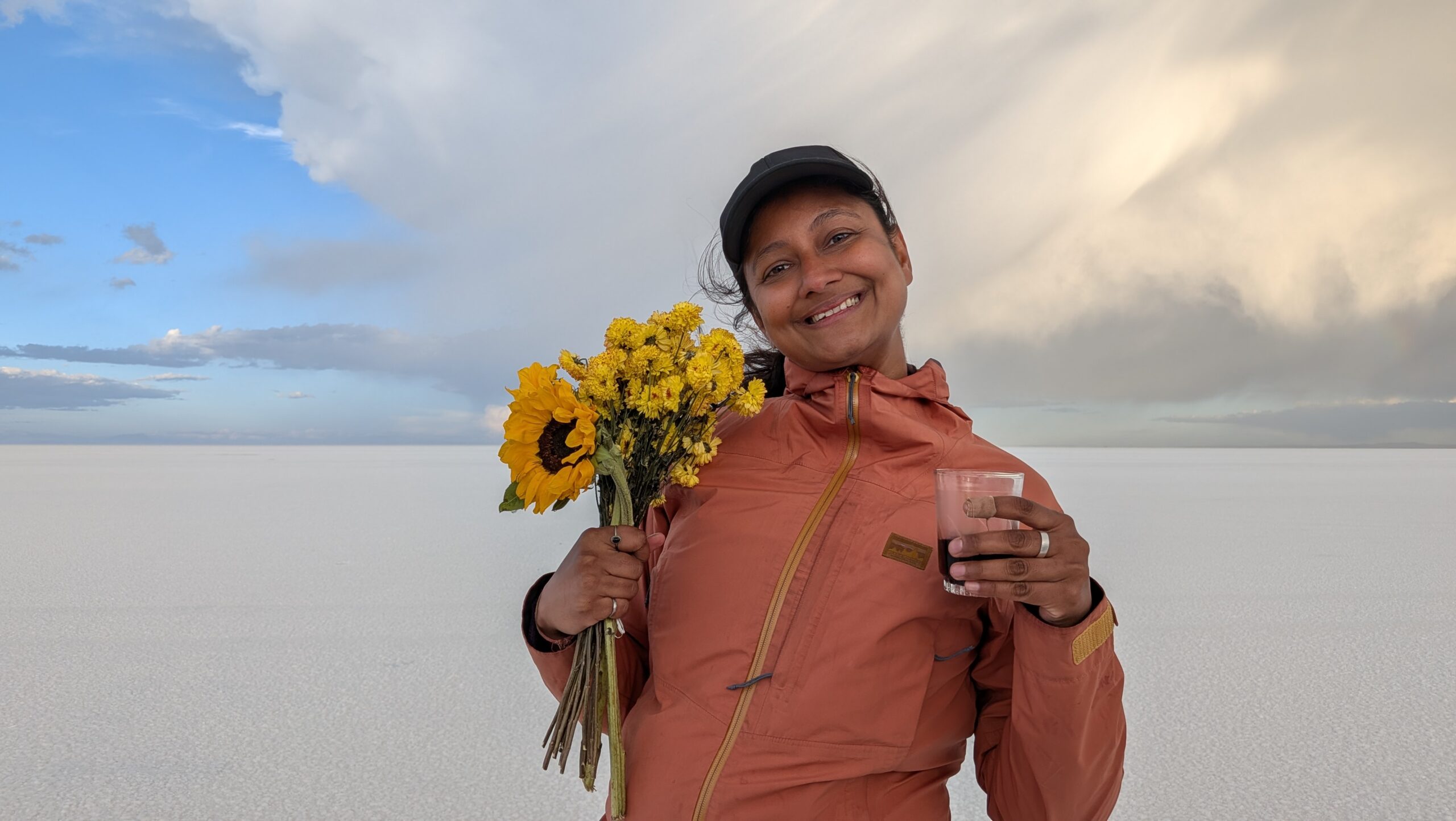
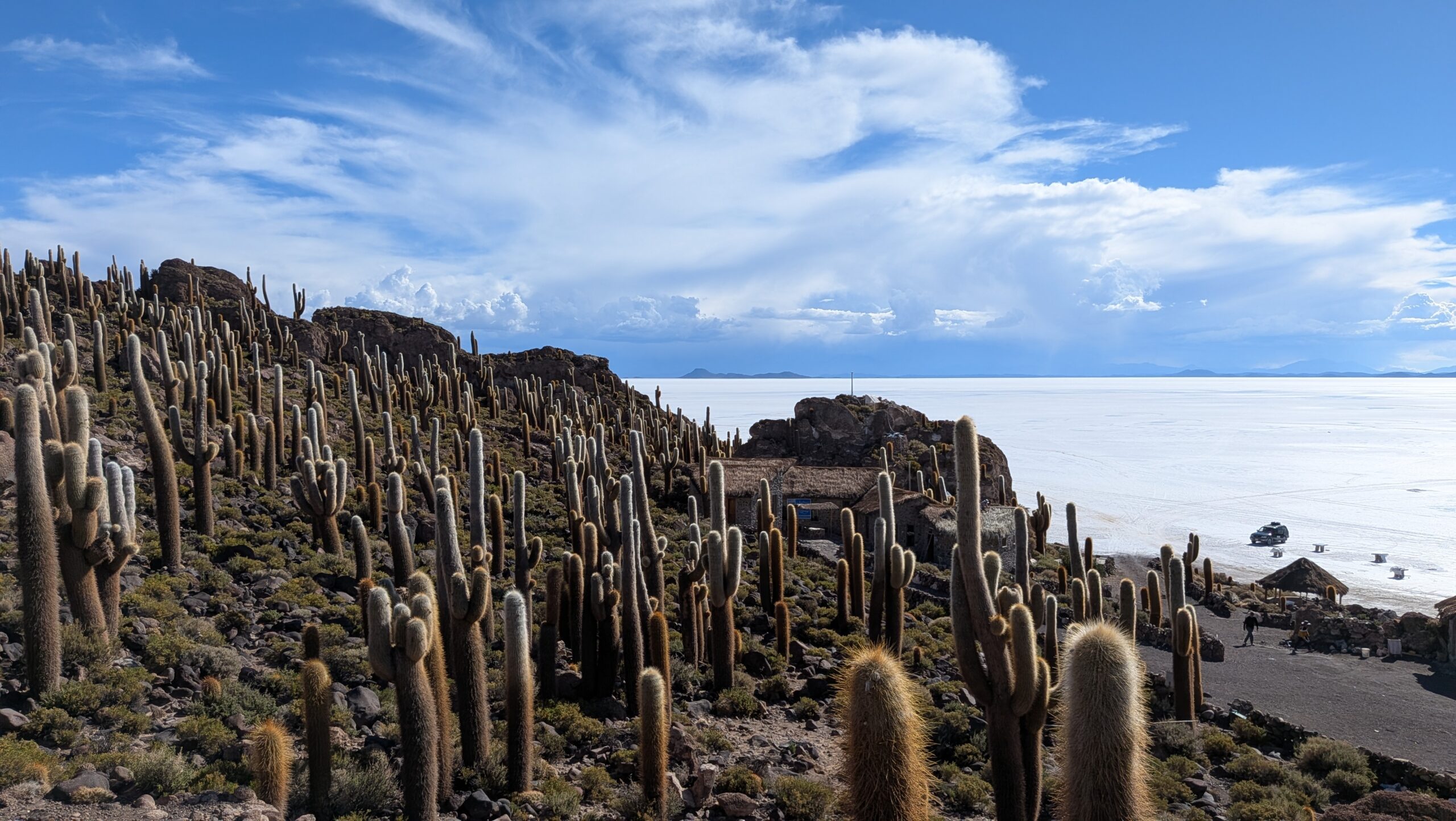
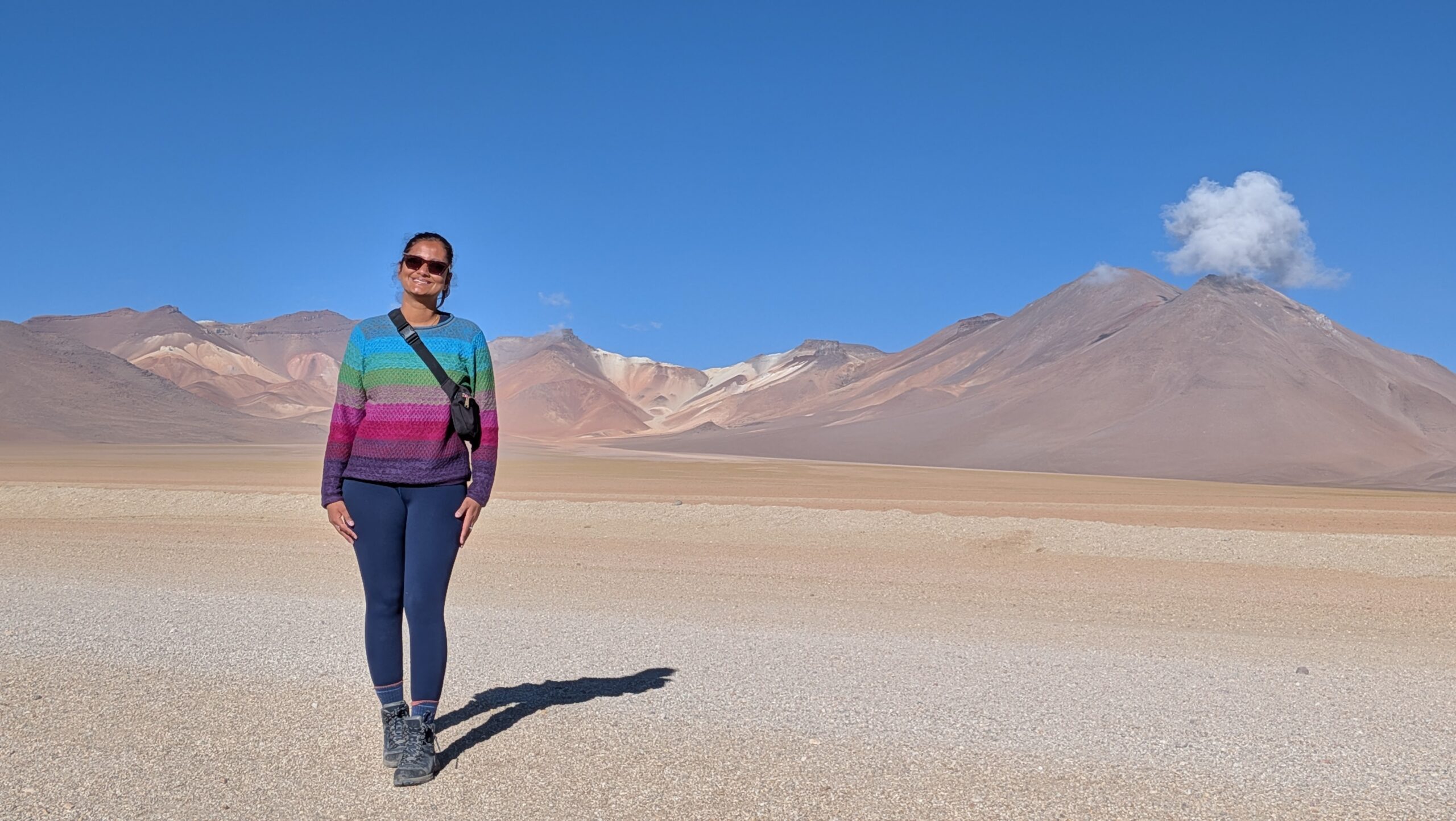
Photo: sunset reflections on the salt flats. Day one of the salt flats with Andes Salt Expeditions: the Train Cemetery, salt-harvesting families, hexagonal patterns and cactus islands, wine at sunset, and a night in a heated salt hotel.
High Altiplano Lagoons, Volcanoes & Flamingos
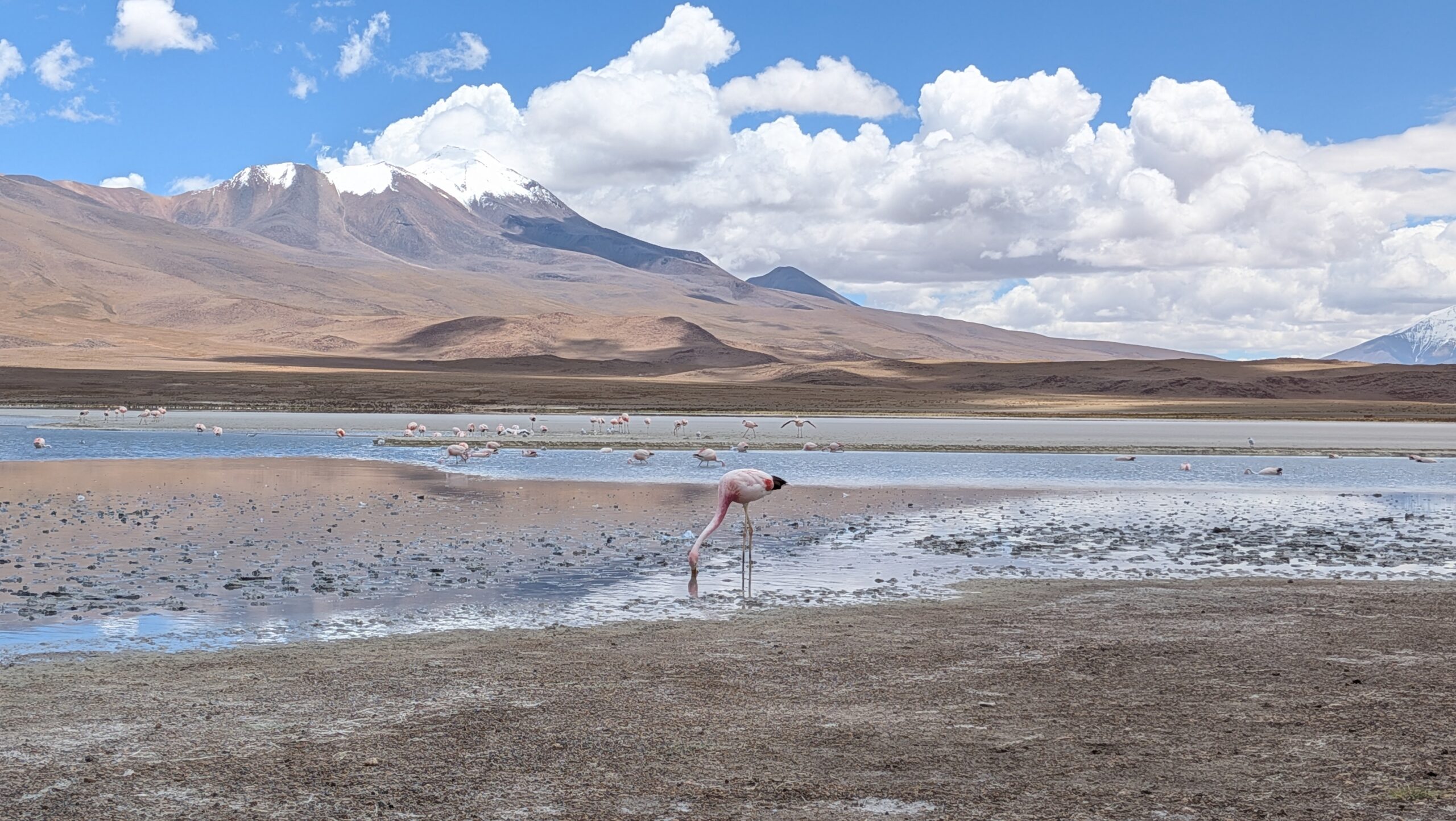
Photo: flamingos in Laguna Colorada. Early start past cacti, llamas, and active volcanoes to the high-altitude lagoons — Laguna Colorada’s flamingos against shifting storm clouds. Overnight at a rustic reserve lodge at 4,300m.
12–14 Day Route
Route optimization: places I missed
If you’re planning an expanded 12–14 day itinerary, add these to your route.
1. Sucre (The White City)
Bolivia’s official constitutional capital, famous for whitewashed colonial architecture, tree-lined plazas, pleasant low altitude, and relaxed café culture.
2. Santa Cruz de la Sierra
In the eastern lowlands — tropical heat, modern dining, and easy access to Amboró National Park or the Jesuit Missions.
3. Huayna Potosí or Acotango
With time to properly acclimatize, target a multi-day mountaineering ascent like Huayna Potosí (6,088m) or Acotango for an epic glacier summit attempt.
4. Oruro Carnival
Traveling in February? Align your dates with the famous Festival de Oruro — one of South America’s most magnificent cultural festivals, with traditional dancers, ornate masks, and brass bands.
Good to know
Frequently asked questions
How bad is the altitude in Bolivia?
The altitude in Bolivia is extreme and must be taken seriously. Places like Copacabana, La Paz, and Uyuni sit between 3,600 and 4,300+ meters above sea level. Drink plenty of water, sip coca tea, avoid strenuous activity on Day 1, and consider altitude medication if recommended by a doctor.
Do I need to book Uyuni Salt Flat tours in advance?
You can book tours in advance online, or just as easily book upon arrival in Uyuni or La Paz. Booking in person often lets you meet your operator directly, choose between standard 3-day tours or private photography tours, and secure competitive rates.
Is it easy to travel around Bolivia without speaking Spanish?
Knowing basic Spanish is very helpful. While hostel staff and major tour guides speak English, local collectivo drivers, market vendors, and bus terminal staff primarily communicate in Spanish.
Plan your own route with quiet confidence.
Safety ratings, real daily costs, and a route to follow — book a session and we’ll build yours together.