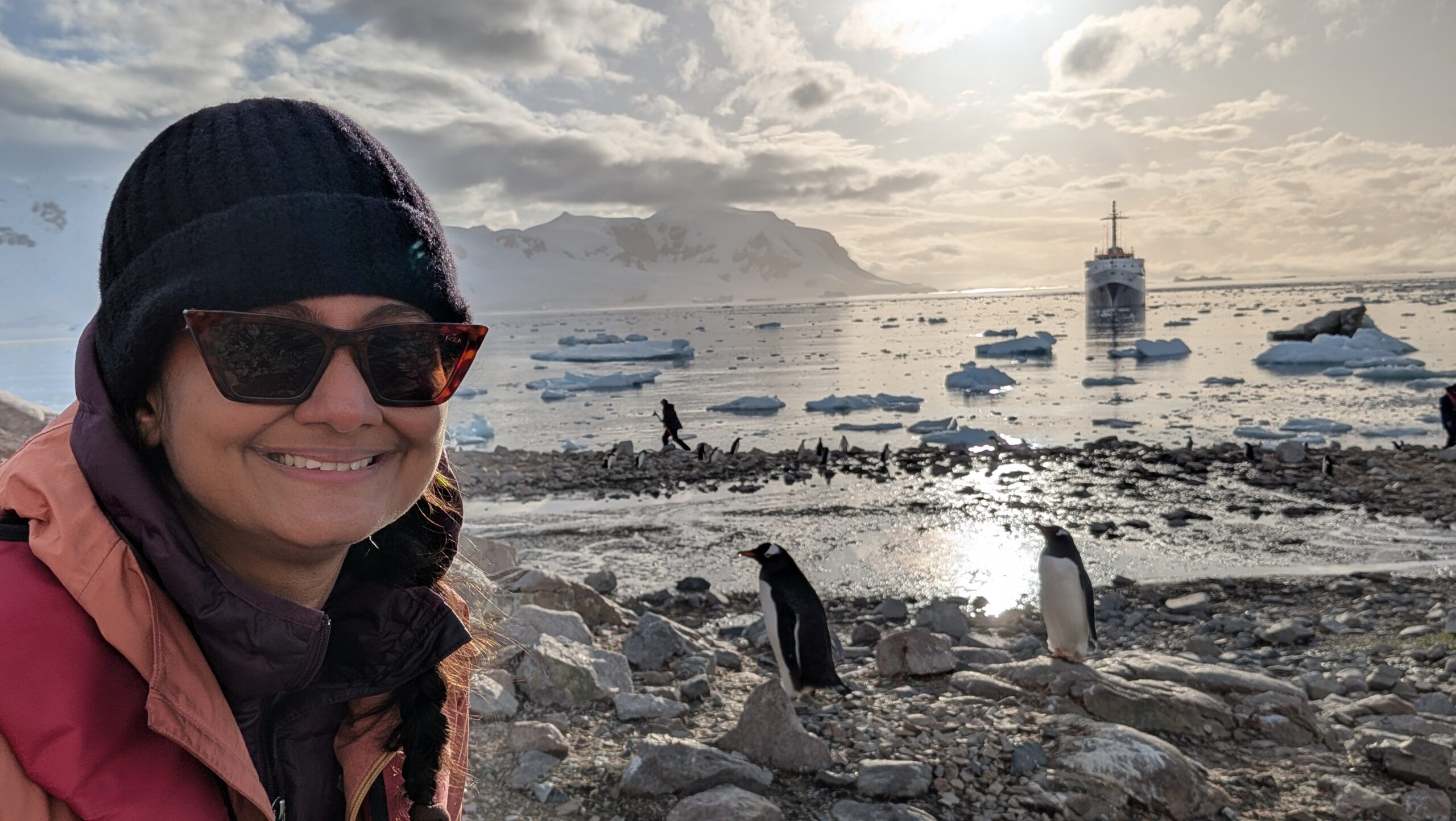
Solo Female Travel · Antarctica
Antarctica, at the edge of the map.
A ten-to-eleven day expedition across the Drake Passage from Ushuaia — daily Zodiac landings, whales surfacing beside the boat, and a Polar Plunge inside a volcanic crater. The seventh continent, on foot.
An expedition to Antarctica via the Drake Passage is a bucket-list, once-in-a-lifetime journey. Sailing from Ushuaia with specialized operators like Antarpply Expeditions, a typical itinerary includes navigating the Drake Passage, daily Zodiac landings, close encounters with humpback whales and penguin colonies, stepping foot on the continent at Portal Point, and a Polar Plunge inside a volcanic crater at Deception Island.
Before you go
Antarctica expedition, at a glance
Best season
November–March — the Antarctic summer, when landings are viable and wildlife is most active. December–January is peak penguin hatching; February–March brings the best whale-watching.
Temperature
-2°C to 5°C (28°F to 41°F) along the Peninsula in season — surprisingly mild, and comfortable with good thermal layers, waterproof pants, and an insulated parka.
The Drake Passage
A roughly 48-hour crossing each way, ranging from the smooth “Drake Lake” to the rough “Drake Shake.” Conditions shift fast — motion sickness medication or patches are worth packing.
What’s included
All meals, daily Zodiac excursions and landings, naturalist-led lectures, and expedition parka/boot rentals — typical of small-ship operators like Antarpply.
Trip length
10–11 days round-trip from Ushuaia, Argentina — roughly 4 days of Drake crossing and 6–7 days of landings and Zodiac cruising.
Language spoken
Expedition staff and naturalists lead lectures and landings in English; departure port Ushuaia is Spanish-speaking.
Budgeting
Estimated trip cost
$7,000–11,000
Per person, USD · 10–11 day small-ship expedition, all-inclusive of cabin, meals, Zodiac landings & gear loan
What to expect
The Antarctica expedition itinerary
Boarding in Ushuaia & Navigating the Drake
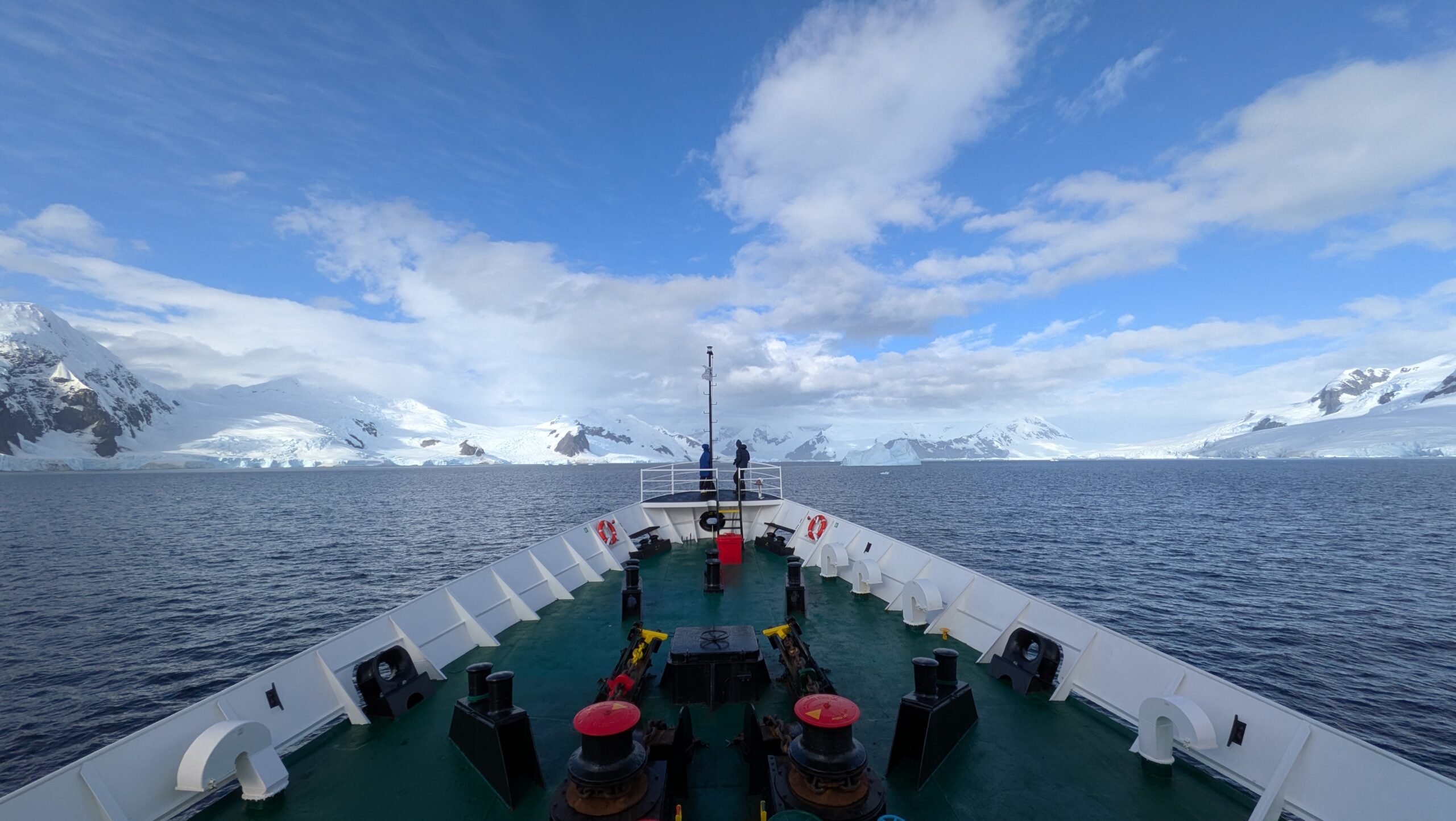
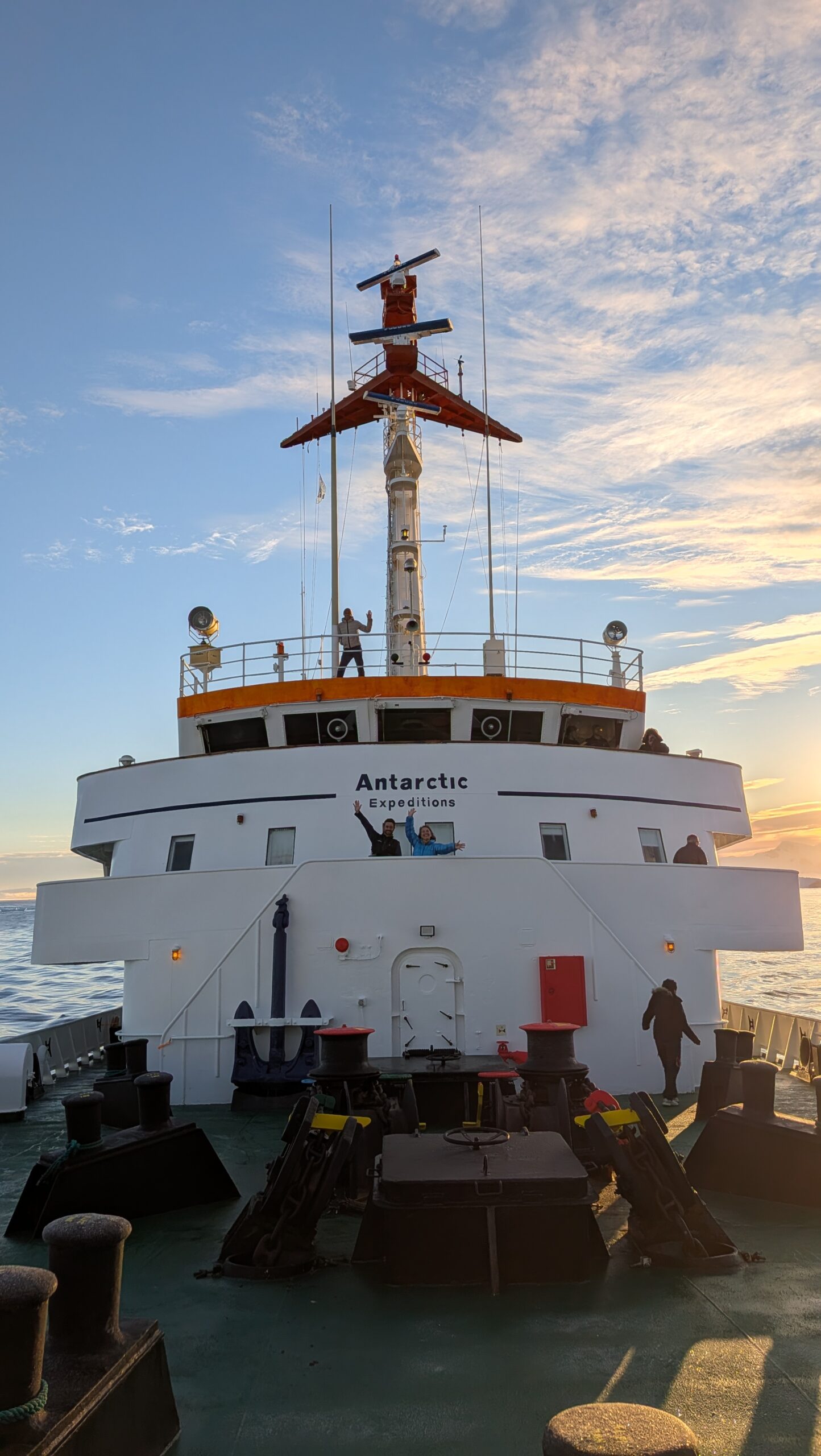
Photo: the ship’s bridge looking out over the open Drake Passage, or dolphins jumping in the Beagle Channel. Depart the port of Ushuaia through the scenic Beagle Channel, watching dolphin pods leap alongside the ship. Then two days navigating the Drake Passage itself — lectures on polar history, seabirds, and marine life, paired with bridge visits and relaxed three-course dining onboard.
First Sightings & Half Moon Island Landing
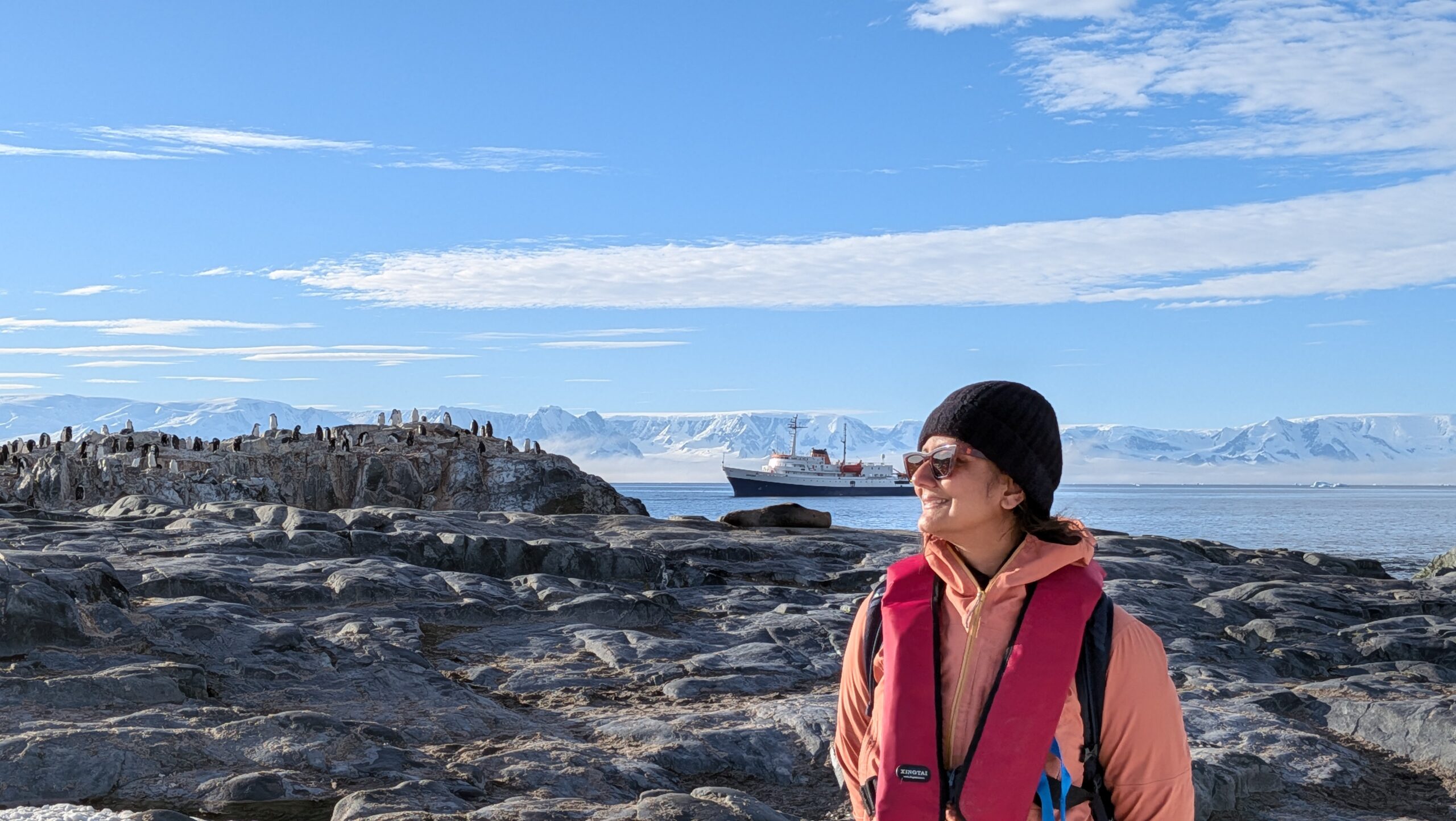
Photo: a Zodiac approaching the shore of Half Moon Island, lined with penguins and glaciers. Spot the first snow-capped peaks of the South Shetland Islands, then suit up in waterproof gear for a maiden Zodiac landing at Half Moon Island — noisy penguin colonies, resting seals, and 360-degree glacial views.
Continental Touchdown at Portal Point
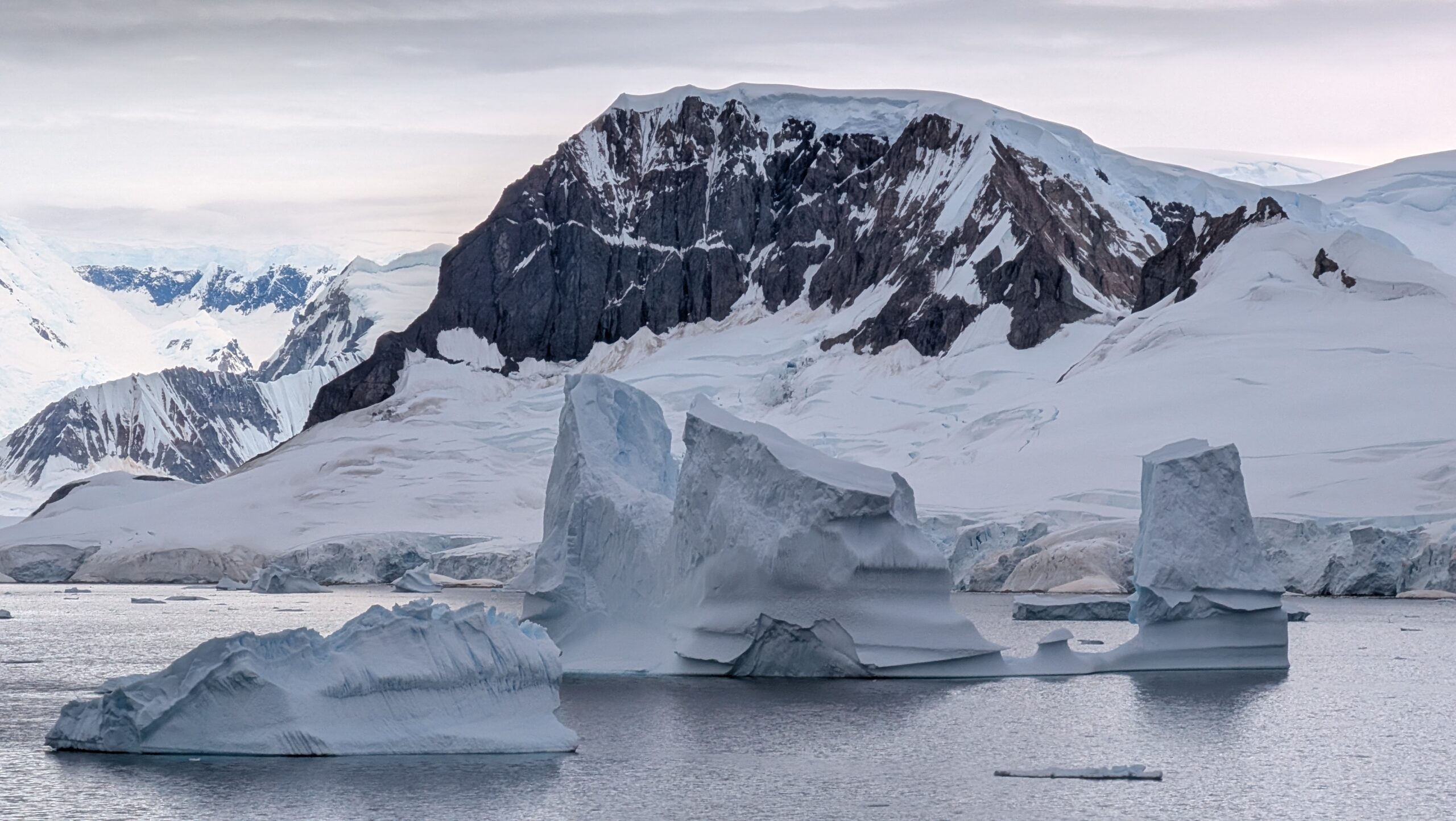
Photo: the panoramic view from the top of Portal Point over the Antarctic ice fields. A morning Zodiac landing at Hydrurga Rocks among seals and nesting penguins, then the big one — stepping directly onto the Antarctic continent at Portal Point, with whales surfacing near icebergs on the Zodiac ride back.
Iceberg Navigation
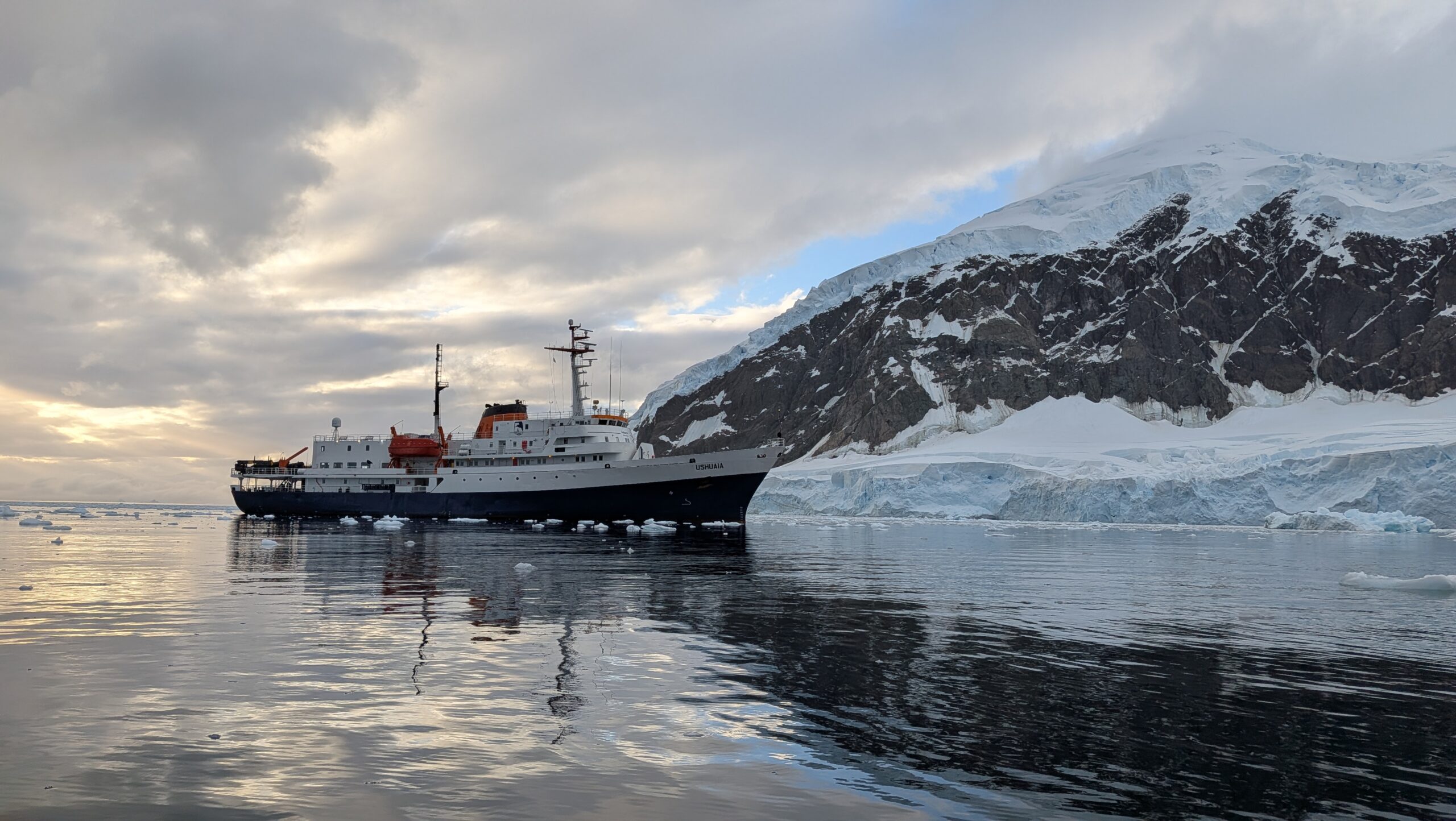
Photo: a close-up of a sculpted, deep-blue iceberg in calm water. Weave through floating iceberg fields and glacier walls by Zodiac, with polar lectures on glacier ages and a slower, warmer rhythm — hot chocolate included.
Whale Breaches & Penguin Paradise
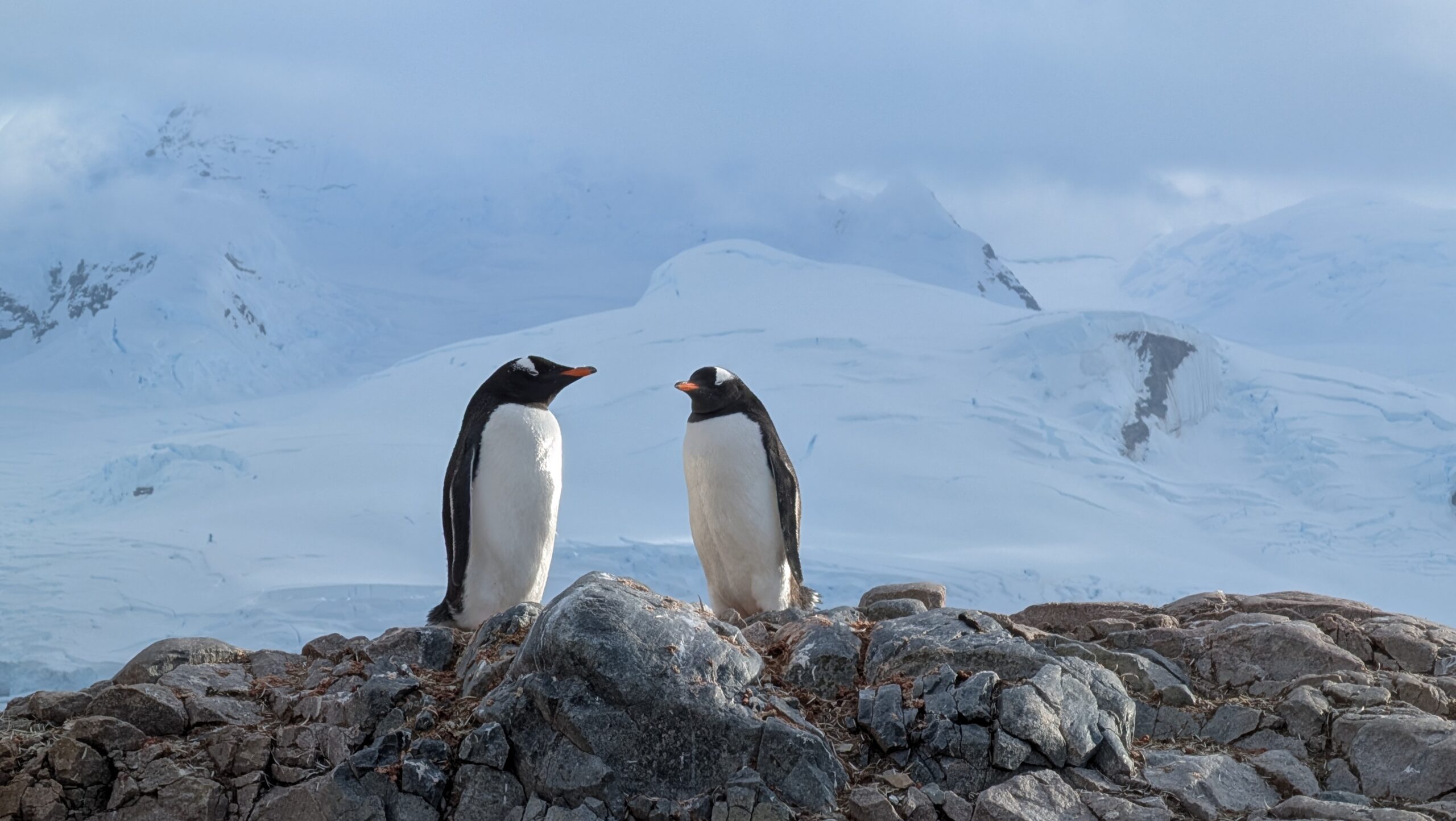
Photo: a humpback whale breaching beside an expedition Zodiac. Close-range humpback whale breaches right next to the boats, a playful leopard seal circling beneath for half an hour, then a landing in Patagonia Bay among thousands of vocal, curious penguins.
The Volcanic Crater & The Polar Plunge
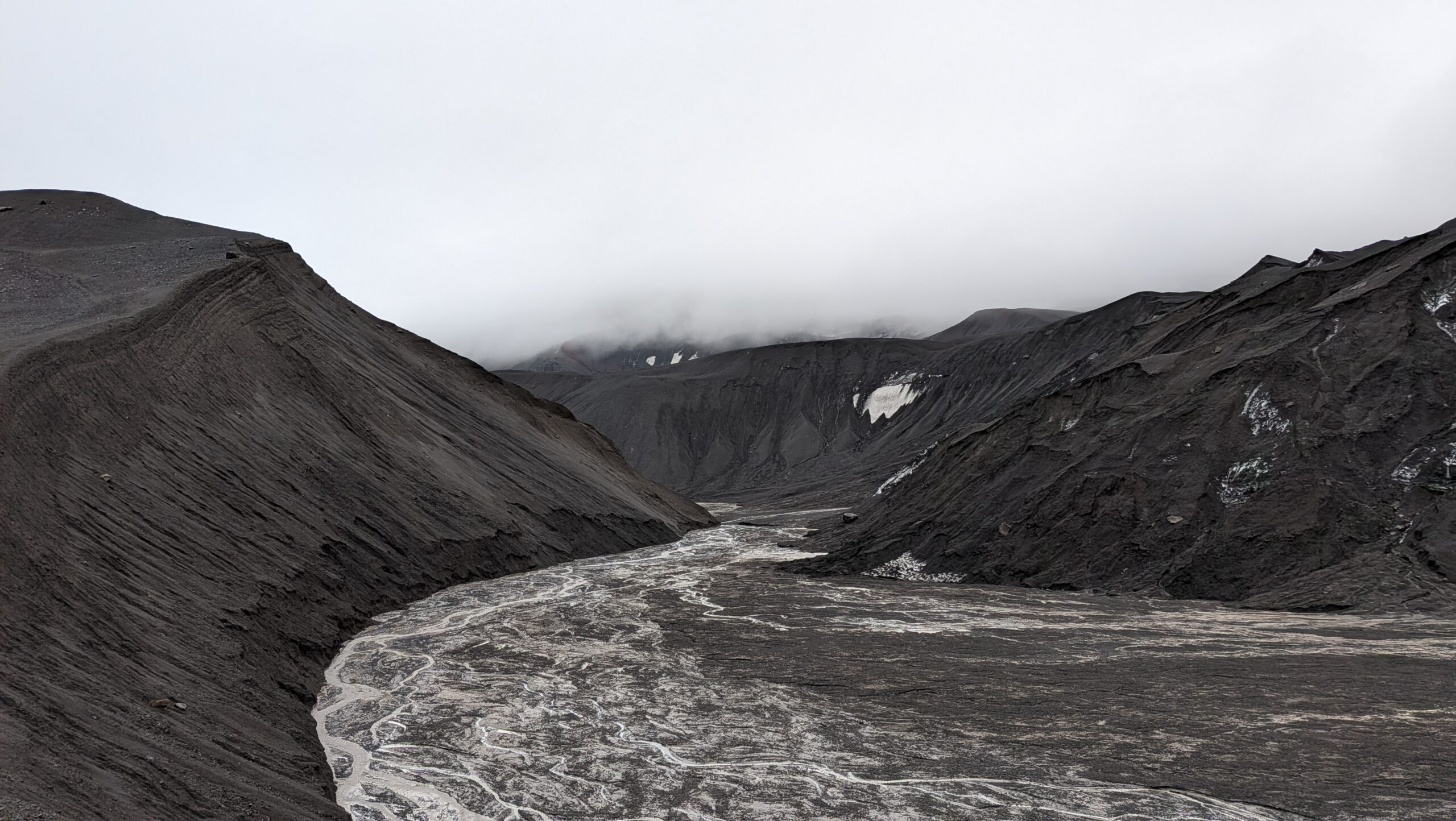
Photo: travelers braving the Polar Plunge on the black sand beach of Deception Island. Sail directly into the flooded caldera of an active volcano, walk black volcanic ash beaches past old whaling-station remnants, then strip down and dive straight into the icy water — the unofficial badge of honor.
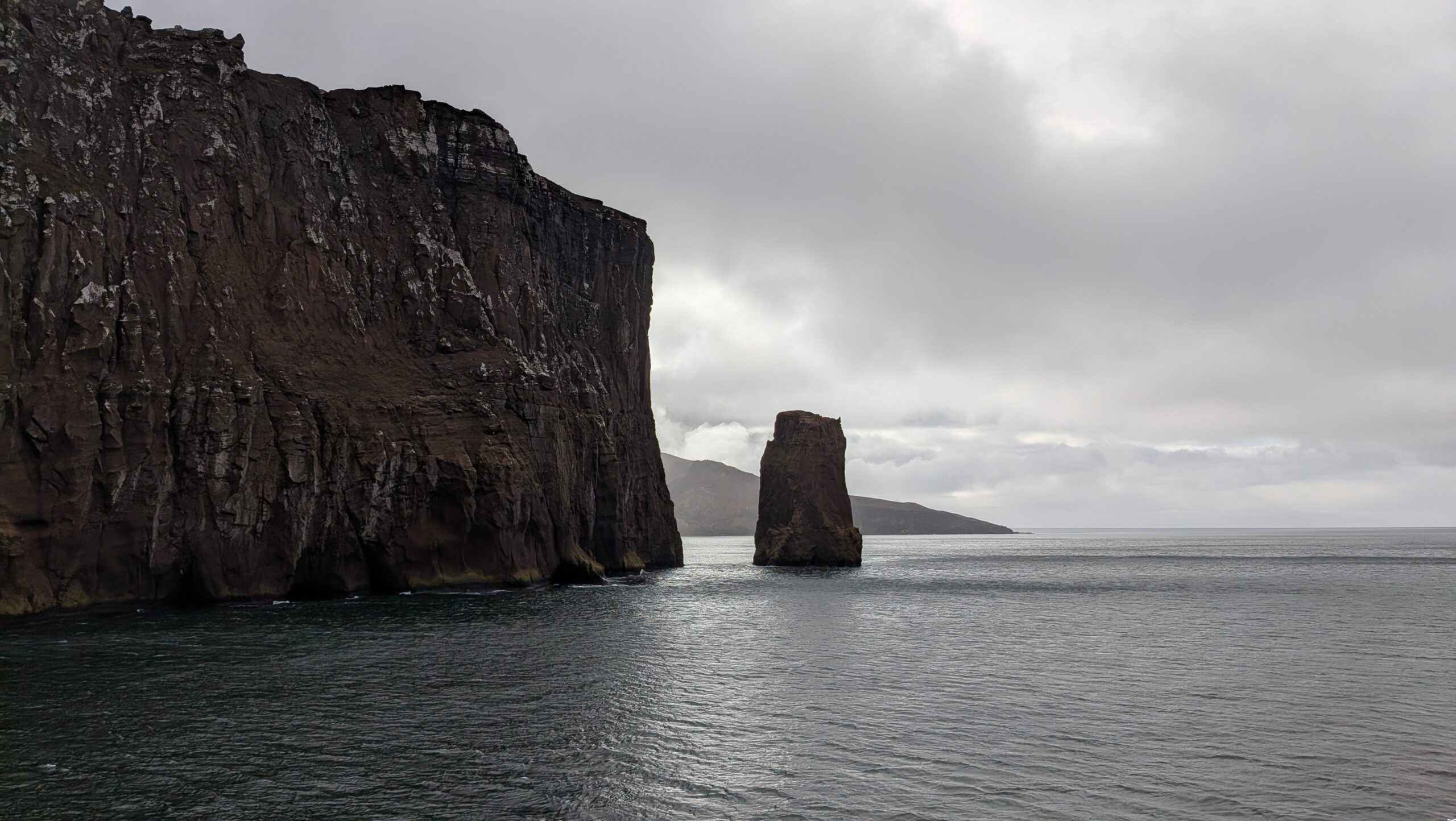
Geothermal Steam & the Return North
Photo: steam rising off the black sand shore at Pendulum Cove. A final landing where geothermal steam rises straight out of the dark volcanic sand, past krill-filled waters and nesting penguins, before returning boots and life jackets as the ship turns north across the Drake.
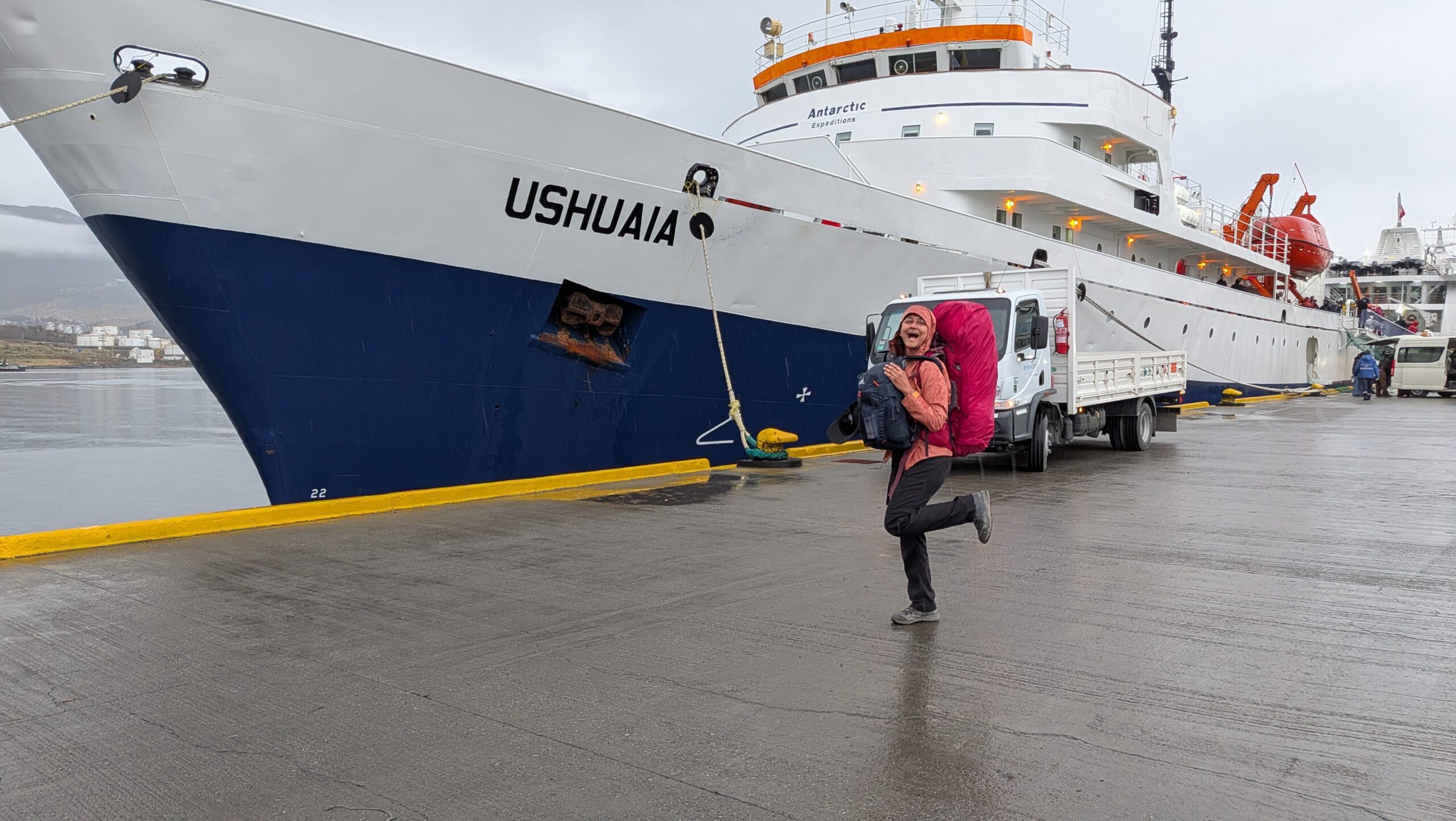
Cape Horn & Final Farewells
Photo: a group celebration shot with expedition staff holding certificates onboard. Cross the Drake once more with lectures and movie marathons, spotting Cape Horn as the seas calm. A quiet evening anchored in the Beagle Channel with trivia and team awards, then disembark in Ushuaia for farewells and a post-trip lunch at Patagonia Brewing Company.
Extend the trip
Route optimization: places you can add
Planning a longer polar or South American itinerary? Consider combining the expedition with these.
South Georgia & The Falkland Islands
A longer 19-to-23-day expedition that adds South Georgia — home to king penguin colonies over 200,000 birds strong — and the birdlife reserves of the Falklands.
Tierra del Fuego National Park
Before boarding in Ushuaia, spend 1–2 days hiking coastal trails, riding the End of the World Train, and walking southern beech forests.
Good to know
Frequently asked questions
How bad is the sea motion in the Drake Passage?
The Drake ranges from the smooth “Drake Lake” to the rough “Drake Shake,” and conditions can shift quickly, with waves and wind causing significant rolling. Taking preventive motion sickness medication, or wearing patches, goes a long way over the 48-hour crossing.
What’s included on an Antarpply Expedition?
Antarpply Expeditions runs a personalized, small-ship experience. Packages include all three-course meals, daily Zodiac excursions and landings, lectures led by polar naturalists, and expedition parka/boot rentals.
How cold is Antarctica during the expedition season (November–March)?
Summer temperatures along the Antarctic Peninsula are surprisingly mild, typically -2°C to 5°C (28°F to 41°F). With good thermal base layers, waterproof pants, and an insulated parka, daily landings and Zodiac cruises feel comfortable.
Plan your own route with quiet confidence.
Safety ratings, real daily costs, and a route to follow — book a session and we’ll build yours together.